
STARTUP TAX SERVICES
Let Kruze Consulting Guide Your VC-Funded Startup Through the Tax Maze
Taxes can be confusing, particularly if you don't deal with them daily like we do.
At Kruze Consulting, our tax services for startups guide VC-funded companies through a complex tax landscape, helping your startup maximize returns and lower its risk.

You don't want your growth derailed by compliance issues, costly penalties, or missed opportunities. Kruze improves your tax position, captures every available deduction and credit, and keeps you compliant. Our tax prep services handle the details of startup taxation while you focus on scaling. Tax work this important pairs closely with your day-to-day startup accounting, and we handle both.
Why Choose Kruze Consulting for Startup Taxes?
Startup-Specific Tax Expertise
Kruze works only with venture-funded startups, so our team has deep knowledge of the startup ecosystem and understands the challenges and opportunities you face.
Increased Tax Savings
We leverage every applicable deduction and credit, putting more money back into your startup and helping extend your runway.
Effective Tax Planning
Our tax strategies grow with your startup, from early stages through maturity.
Contact Us for a Free Consultation
Our Core Services
What taxes do startups need to pay?
Most VC-backed startups are Delaware C-Corps, so they deal with several types of tax at once: federal income tax, state and local taxes, payroll taxes, sales tax, and the Delaware franchise tax. Kruze handles all of them:
Federal Income Tax
C-Corps pay federal income tax at a 21% flat rate. We prepare and file your federal return (Form 1120), due April 15 for calendar-year filers, with a six-month extension available to October 15.
State and Local Taxes
We manage state and local tax obligations across the jurisdictions where your startup operates, so nothing slips through as you expand into new states.
Payroll Taxes
We make sure payroll taxes are calculated, withheld, and filed correctly as you add employees, keeping you compliant with federal and state agencies.
Sales Tax
Once you generate revenue, sales tax can apply based on where your customers are. We help you figure out where you have obligations and keep you compliant.
Delaware Franchise Tax
Every Delaware corporation owes the franchise tax and annual report by March 1: a minimum franchise tax of $175 plus a $50 annual report filing fee, about $225 total for most startups. We calculate the tax using the method that costs you less and file it on time.
Startup Tax Compliance
Stay on top of federal, state, and local tax requirements. We keep your startup compliant while improving your tax position. For filing specifics, see our startup tax returns page.
Strategic Tax Planning
We build tax strategies that fit your startup's growth, funding stage, and long-term goals.
R&D Tax Credit Maximization
Kruze knows tax credits for startups. We help you claim the full value of R&D tax credits, turning your innovation spend into real tax savings.
SnapAttack Case Study
Discover how SnapAttack, a cybersecurity leader, was acquired by Cisco with Kruze Consulting's support.
Read the Case Study

“The Kruze tax advisory team was accessible, helpful, and very communicative.”
Cinder Technologies
Cinder Technologies partnered with Kruze Consulting to claim significant R&D tax credits, resulting in substantial savings for their growing startup.
Explore the Case Study

“I can email my account manager with questions, and if necessary, she will refer me to specialists on the tax team or the R&D tax credit team. I really appreciate that level of service.”
Frequently Asked Questions
Venture-funded startups should be aware of several types of tax: federal income tax (a 21% flat rate for C-Corps), state income taxes, applicable local taxes, payroll taxes, and sales tax if you generate revenue. The exact mix depends on your location, customer base, and business model, and our tax team helps you identify and meet each compliance requirement.
Startups benefit from R&D tax credits because the credit is available across many industries, not just tech. Activities that develop new products, processes, or services, or improve existing ones, can qualify, including research, design, and testing. These credits can reduce your tax liability or provide a refund on payroll taxes even before you earn revenue, which frees up capital for growth.
When raising venture capital, the key tax considerations include the implications of different funding structures, possible changes to your company's tax status, and planning for future exits or acquisitions. We help you work through these so you can make informed decisions.
A startup should start working with a tax professional as early as possible, ideally before it has revenue. Even pre-revenue startups gain from proper planning around entity structure, fundraising, and the systems needed for future compliance.
Most VC-backed startups are C-Corps, so the federal income tax return (Form 1120) is due April 15, with a six-month extension available to October 15. The Delaware franchise tax and annual report are due March 1: a minimum franchise tax of $175 plus a $50 annual report filing fee, about $225 total for most startups. State and local deadlines vary by jurisdiction.
Latest Blogs on Startup Tax Services
Stay updated with expert insights, practical tips, and the latest tax strategies tailored to help VC-funded startups understand their taxes and stay compliant.
R&D Tax Credit Timing for Fast-Growing Startups
Learn when fast-growing startups should claim R&D tax credits, from payroll offset timing to fundraising alignment and QRE tracking systems.
 Karen Yates, BS
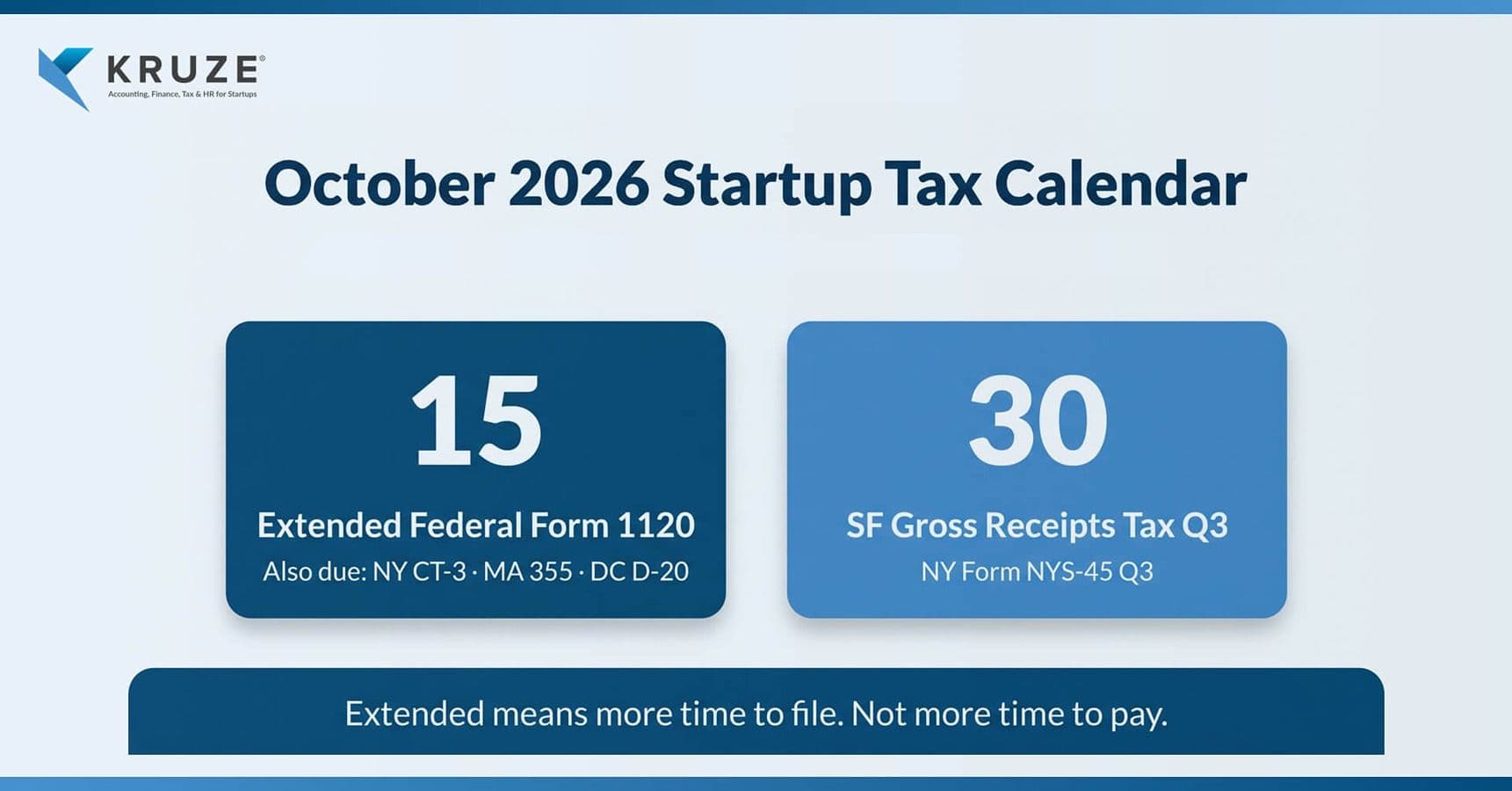
October 2026 startup tax deadlines
October 2026 Startup Tax Deadlines: Extended Form 1120 Returns, State Filings, and the San Francisco Gross Receipts Tax.
Bryan Long, MBA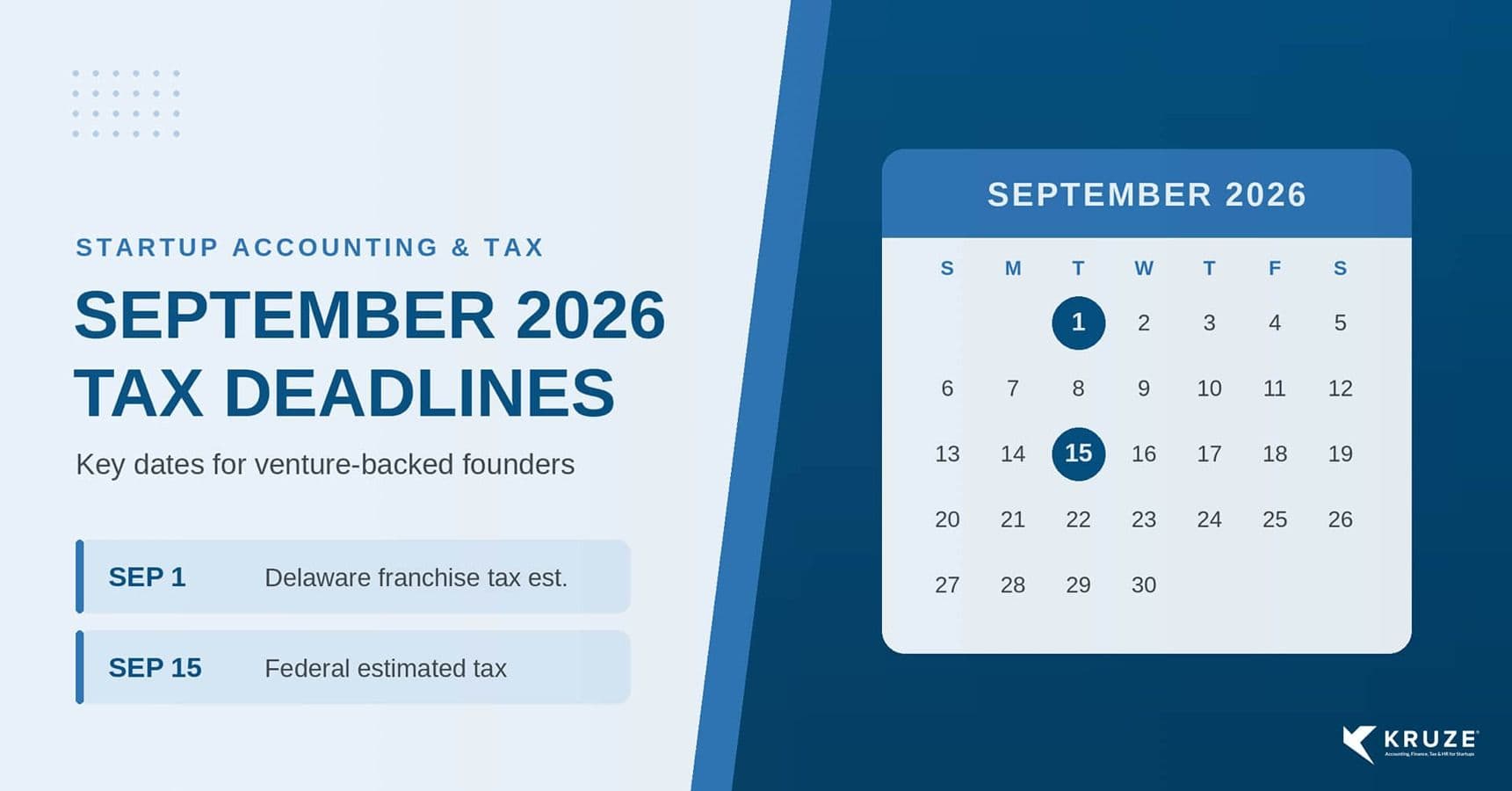
September 2026 startup tax deadlines
Key September 2026 tax deadlines for startups, including federal estimates and major state, city, and local filing dates.
Bryan Long, MBAAccounting expertise built for founders
Bookkeeping, Tax, R&D credits, and fractional CFO services, all under one roof.
- 800+ VC-backed startups served
- $15B+ raised by our clients
- Trusted by founders from Pre-Seed to Series C
Talk to an experienced accountant, not a generic sales person