
STARTUP TAX RETURNS
Filing Tax Returns for VC-Backed Startups: Let Kruze Help
Many VC-funded startups struggle with complex tax regulations. Don't let tax season slow down your company's growth.
At Kruze Consulting, we specialize in preparing tax returns for venture-backed startups, ensuring you maximize your deductions while staying compliant.
150+ tax professionals CPAs, controllers, and CFOs

What is a startup tax return?
A startup tax return is the annual filing a corporation submits to the IRS and relevant state agencies to report income, expenses, and tax liability for the year. For a Delaware C-corp, the primary filing is federal Form 1120. Most companies also owe a Delaware franchise tax return and filings in any state where they have employees, revenue, or property. These obligations apply even if the startup is pre-revenue or unprofitable.
Who needs to file: Any incorporated startup, including pre-seed and seed-stage companies with no revenue. Missing a filing, even a zero-activity return, creates IRS penalties and problems during due diligence.
When it’s due: The federal Form 1120 is due April 15 for calendar-year filers, with an automatic extension to October 15 available. Delaware franchise tax is due March 1. State returns vary by jurisdiction.
How Much Will My Return Cost?
You can estimate the cost of your startup's tax return using our tax return calculator.
Why Choose Kruze Consulting?
Extensive In-House Team
Kruze Consulting boasts a large in-house tax team, composed of over 150 seasoned professionals, including CPAs, controllers, and CFOs. As a CPA firm specializing in venture-backed startups, Kruze's tax team is led by industry veterans like Vanessa Kruze, a Deloitte Tax alumna, and Dave Lowe, both CPAs with extensive experience in guiding startups through complex transactions and tax filings. The team's diverse backgrounds include Big 4 accounting firms, top-tier startups, and venture capital roles. Kruze's tax experts deliver comprehensive services, from federal and state tax filings to securing R&D tax credits, helping hundreds of startups optimize their financial strategies while maintaining compliance.
Hands-On Partnership with Technology-Driven Support
We take a "hands-on partnership" approach, helping our clients prepare for acquisitions and successfully navigate the complexities of due diligence, compliance, and strategic exits. By combining personalized guidance with advanced technology, we equip our clients to achieve their goals efficiently and effectively.
Startup-Specific Expertise
Our team understands the unique tax challenges faced by VC-funded companies, including state and local taxes. Remember, if you have employees or do business (e.g. generate revenue, rent/own property) in other states, you may have triggered tax nexus there. Our team of experts will help you figure it out!
Highly Experienced in R&D Tax Credits
We are experts in research and development (R&D) tax credits, which can help even unprofitable startups save on payroll taxes through a payroll tax refund. That's money you can put back into building your company!
Investor-Ready Financials
Your returns must match your financial statements, particularly during due diligence (every startup goes through diligence eventually). Our carefully prepared returns instill confidence in your current and potential investors.
Talk to an expert
Our Tax Return Services
Comprehensive Tax Return Preparation
We handle federal, state, and local tax returns, tailored to your startup's specific needs. Our tax team understands the complex tax rules and regulations for businesses, including the ones that are unique to startups.
Strategic Tax Planning
We work with you year-round to implement tax-efficient strategies that align with your business goals. Solid tax planning will make next year's taxes easier and help you find deductions and credits you might miss.
Tax Nexus Review
State and local taxes are complicated, since states and many municipalities have different guidelines for the business activities that trigger taxes (called tax nexus). We're experts in nexus and can guide you through the maze of regulations you need to follow.

“We serve a very broad set of customers, and I can absolutely trust and rely on Kruze to handle our taxes. It’s one less thing I have to worry about, and it’s just so worth it.”
Frequently Asked Questions
Tax returns for startups (assuming yours is a Delaware C-corporation) are due April 15, but you can file an extension until October 15. Note that filing an extension just gives you more time to complete your business tax return – you'll still need to estimate and pay any taxes due by April 15. We publish a comprehensive list of tax deadlines each year.
Absolutely. Even if your startup earned little or no profits, you are required by law to file federal and state tax returns. Some states may levy small annual fees, regardless of profitability. And remember – your company will have the opportunity to use past losses to offset future taxes.
Yes, you can, but it's really not recommended. Our tax experts at Kruze are trained on the latest tax code and filing requirements, and by doing it yourself, you risk missing important details that could give you credits and/or deductions, saving your company money.
You'll need your startup's IRS employer identification number (EIN), basic business information, shareholder information (including Social Security numbers), all prior returns, your financial statements, and your capitalization table. For more information, see our detailed checklist.
Contact Us for a Free Consultation
Latest Information on Startup Tax Returns
Explore key guidance, resources, and expert advice to help VC-funded startups navigate their tax return filings with confidence and accuracy.

R&D Tax Credit Timing for Fast-Growing Startups
Learn when fast-growing startups should claim R&D tax credits, from payroll offset timing to fundraising alignment and QRE tracking systems.
 Karen Yates, BS
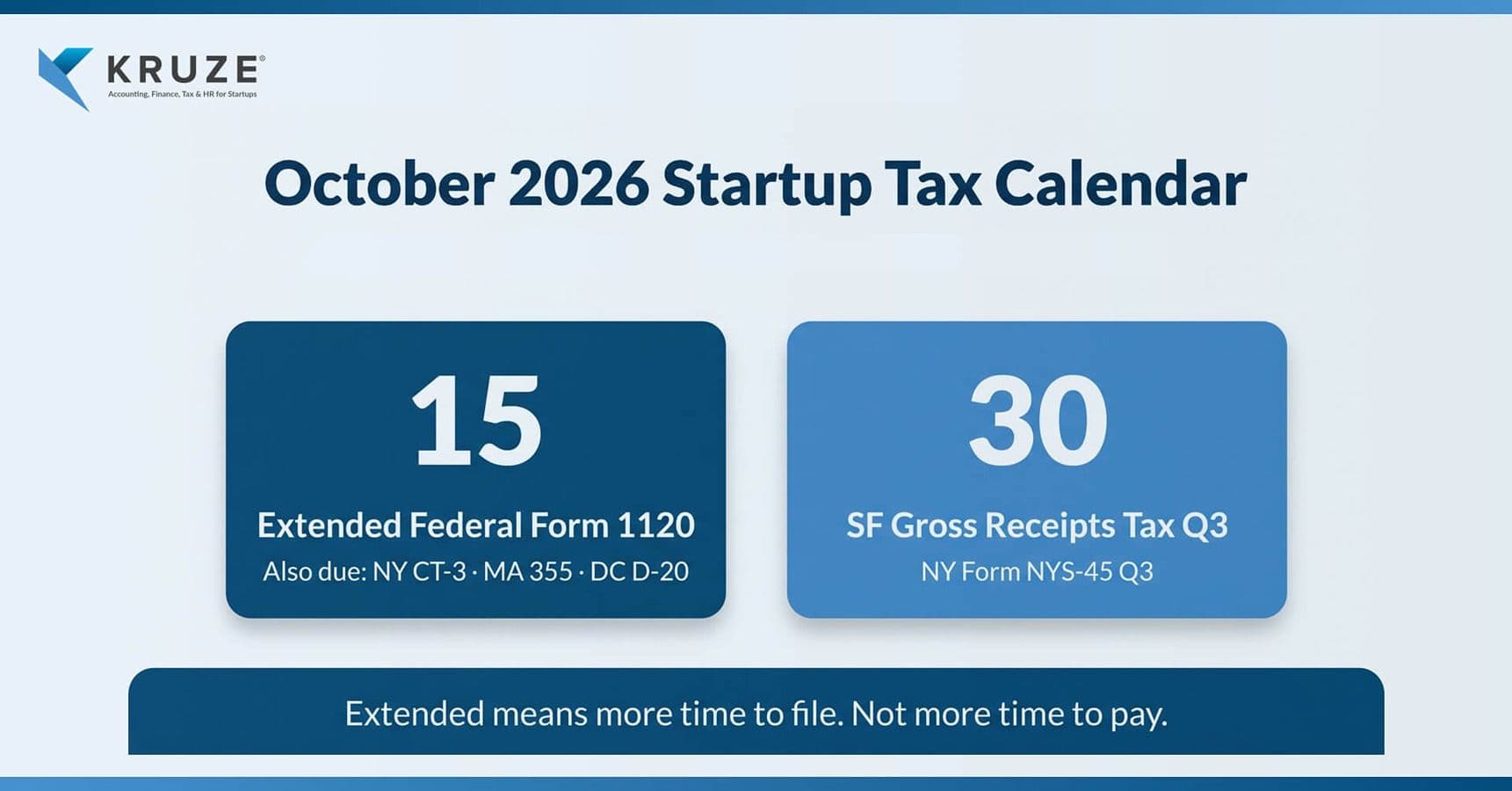
October 2026 startup tax deadlines
October 2026 Startup Tax Deadlines: Extended Form 1120 Returns, State Filings, and the San Francisco Gross Receipts Tax.
Bryan Long, MBA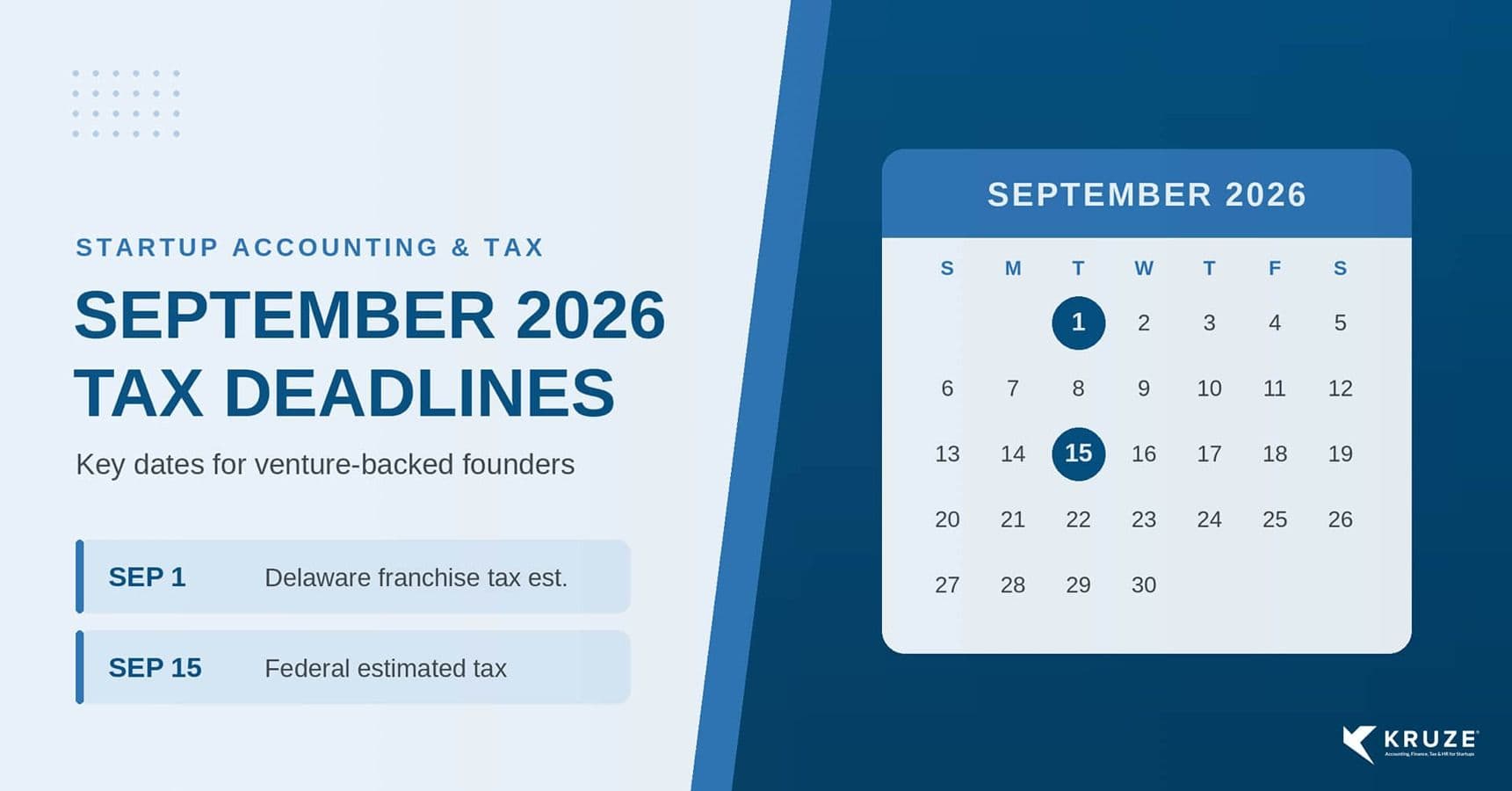
September 2026 startup tax deadlines
Key September 2026 tax deadlines for startups, including federal estimates and major state, city, and local filing dates.
Bryan Long, MBAAccounting expertise built for founders
Bookkeeping, Tax, R&D credits, and fractional CFO services, all under one roof.
- 800+ VC-backed startups served
- $15B+ raised by our clients
- Trusted by founders from Pre-Seed to Series C
Talk to an experienced accountant, not a generic sales person